
Quick Answer
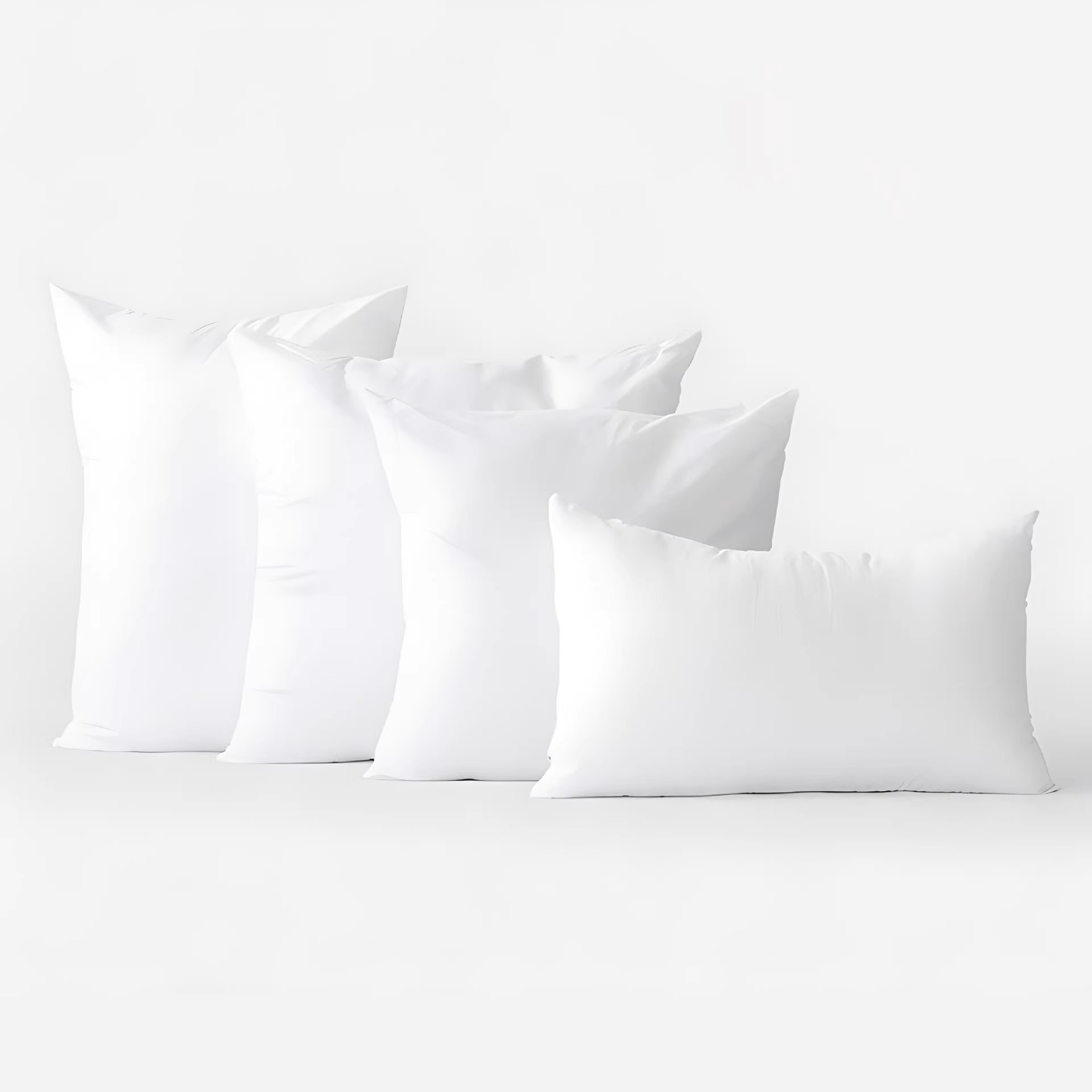
Pillow inserts are filled with one of three families: PP hollow fibre, memory foam, or a down alternative. Hollow fibre gives the best loft for the cost and is the default for decorative and hospitality work. Memory foam gives slow-recovery support and a heavier hand. Down alternative imitates the soft collapse of down without the sourcing and care complications. The fill decides how the pillow behaves over two years, which is longer than most buyers test it.
| Fill | Loft and recovery | Hand and weight | Best fit |
|---|---|---|---|
| PP hollow fibre | Good loft, moderate recovery | Light, springy | Decorative covers, hospitality, volume programmes |
| Memory foam | Holds shape, slow recovery | Heavy, firm | Support seating, structured covers |
| Down alternative | Soft collapse, good recovery | Light, soft | Premium decorative, retail comfort positioning |
| Blended fills | Between the parents | Varies by ratio | Cost-tuned programmes |
Why the Fill Matters More Than the Cover
A cover is judged in the first thirty seconds; a fill is judged over two years. The cover’s colour and construction are visible immediately, while the fill’s behaviour (whether the pillow still looks full after a season, whether it needs plumping every morning, whether it collapses under a guest’s head) only becomes apparent in use. That makes the fill a longer-term decision than the cover, even though it is usually the smaller line item.
The other reason the fill matters is that it cannot be corrected later. A cover that arrives too loose can sometimes be filled with an aftermarket insert, but a programme that ships a filled product has committed to the fill, and the customer experiences that commitment directly.
PP Hollow Fibre: The Volume Default
Hollow fibre is a synthetic fill in which each strand has a hollow core, which traps air and gives more loft per gram than a solid fibre. That efficiency is why it dominates decorative and hospitality programmes: it delivers a full-looking pillow at a lower fill weight, and it recovers reasonably after compression.
Its weaknesses are equally predictable. It loses loft over time as the fibres compact, and a heavily used hollow fibre pillow will flatten faster than a foam or a high-quality alternative. For a decorative pillow that is plumped but not slept on, that degradation is slow enough to be irrelevant. For a pillow that is used nightly, it shows within a year.
Memory Foam: Support, Not Softness
Memory foam inserts behave differently from every other fill: they respond to heat and pressure, recover slowly, and hold a shape. That makes them the right choice where the pillow must support rather than cushion, such as a reading pillow or a structured back cushion, and the wrong choice where the pillow must look soft and full.
The practical consequences for a buyer are weight and packing. A memory foam insert is substantially heavier than a fibre insert of the same size, which changes shipping cost and the feel of the finished product. It also does not compress for packing the way a fibre insert does, so carton configuration has to be planned around it.
Down Alternative: The Comfort Positioning
Down alternative uses fine synthetic fibres engineered to imitate the soft collapse of natural down. It gives a softer, more yielding hand than hollow fibre and a better drape against the body, which suits premium decorative ranges and comfort-led retail positioning.
The trade is cost and, sometimes, recovery. A down alternative insert can lose its shape if it is compressed hard in packing, and the recovery after unpacking varies by construction. A buyer specifying this fill should test recovery after a simulated pack-and-unpack cycle rather than judging the insert as it comes off the sample table.
Choosing a Fill Against the Programme
- Volume decorative programme: hollow fibre, because loft per gram is the cost driver.
- Hospitality decorative cushions: hollow fibre with a defined loft specification, because replacement is routine.
- Support or structured covers: memory foam, accepting the weight and packing consequences.
- Retail comfort positioning: down alternative, with a recovery test before bulk.
- Cost-sensitive blended range: a specified blend, with the ratio written into the brief.
Cairun produces pillow inserts with shells in nonwoven, poly-cotton and cotton at defined weight bands, filled with PP hollow fibre, memory foam or down alternative, in square, round, lumbar and custom shapes. The confirmed pillow insert MOQ is 500 pieces per programme. For sizing against a cover, the cover and insert size guide sets out the relationship, and the pillow insert sourcing guide covers the programme structure.
For buyers ready to specify, Cairun supplies pillow inserts. The full range is on the pillow inserts page, or send your specification for a quote.
Send the size range, intended use, fill preference and quantity per size. Cairun can prepare an insert specification for review.
FAQ: Pillow Insert Fill Types
Which fill is best for decorative pillows?
PP hollow fibre is the most common choice for decorative work because it gives good loft per gram at a lower fill weight. Down alternative is used where a softer, more premium hand justifies the higher cost.
Does memory foam make a good pillow insert?
It suits structured or support cushions, where holding a shape matters more than looking soft. It is heavier and does not compress for packing, so shipping and carton planning have to account for it.
How long does a hollow fibre insert keep its loft?
It depends on use. A plumped decorative pillow degrades slowly; a nightly-used pillow shows compaction within about a year. That difference should guide which fill goes into which product.
Can fills be blended?
Yes, and blends are common in cost-tuned programmes. The ratio must be specified in writing, because two blends sold under the same name can behave very differently.
What is the pillow insert MOQ?
The confirmed pillow insert MOQ is 500 pieces per programme.