
Quick Answer
A pillow cover is the outer decorative or protective shell; an insert is the filled form that gives it shape and volume. They are bought separately because they are made by different processes and wear at different rates. The cover carries the design, the fabric and the closure; the insert carries the fill, the firmness and the recovery. Ordering one without the other is the most common reason a pillow programme arrives with the wrong proportions.
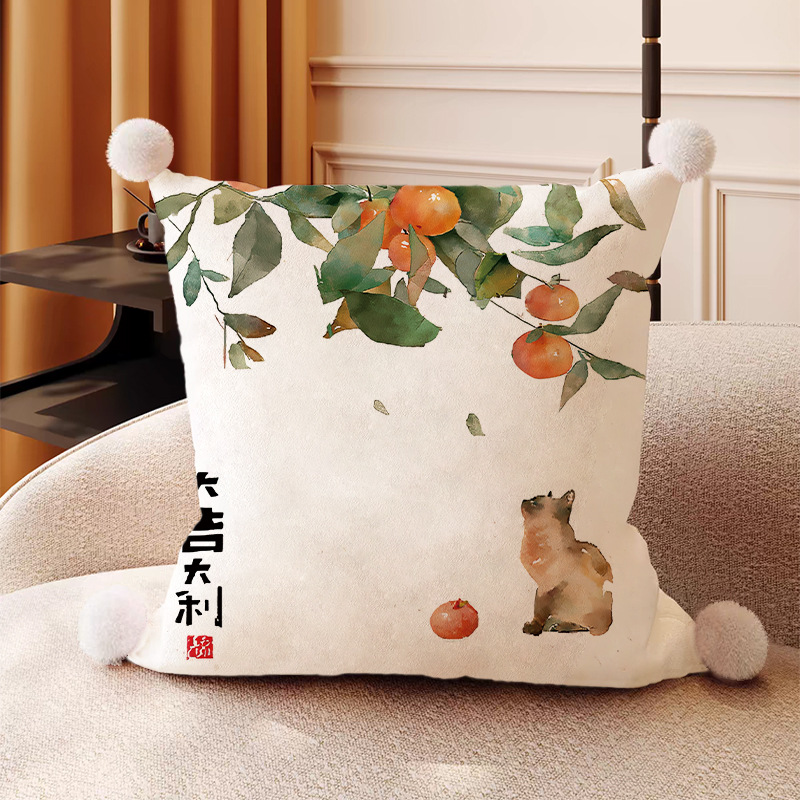
| Decision | Belongs to the cover | Belongs to the insert |
|---|---|---|
| Outer appearance | Fabric, colour, print, texture | Not applicable |
| Closure | Zip, envelope, button, tie | Not applicable |
| Finished size | Cut size with seam allowance | Fill size and loft |
| Firmness and support | Not applicable | Fill type, weight and density |
| Care | Wash instruction for the shell | Spot clean or wash per fill type |
Two Products, Two Supply Chains
A cover and an insert are not two halves of one item; they are two products that happen to be used together. The cover is a cut-and-sew textile item with a closure, a print or a weave, and a finished edge. The insert is a filled form with a shell, a fill material, a fill weight and a target loft. Different equipment, different QC criteria, different lead time logic.
This matters commercially because buyers often brief them as one line item. When that happens, the size is usually taken from the cover and the insert is chosen from a stock list, which is exactly how programmes end up with covers that look empty at the corners or inserts that must be compressed to close.
The Size Relationship Is Not One to One
A cover and an insert of the same nominal size do not produce a full pillow. The insert needs enough extra dimension to fill the cover’s corners and to compensate for the seam allowance and for the fill settling in use. The common commercial convention is for the insert to be slightly larger than the cover’s finished size so the cover reads as full rather than loose.
The right ratio depends on the fill. A firm fill needs less oversize than a soft one, because a firm fill does not compress into the corners as readily. That is why the insert decision has to be made against the cover size and the intended look, not from a size chart alone. The cover and insert size guide sets out the sizing relationship.
Fill, Loft and Recovery
The insert determines how the pillow behaves: how it holds shape, how it feels, and how quickly it returns after compression. Fill options at Cairun include PP hollow fibre, memory foam and down-alternative, with shell constructions in nonwoven, poly-cotton and cotton at defined weight bands. Standard formats include square, round, lumbar and custom shapes.
The buyer decision is usually driven by the end use. A decorative pillow that must hold a crisp shape wants a firmer fill; a pillow that must feel soft on contact wants a softer one. Getting that wrong is not a cover fault, and no amount of cover refinement will correct it.
Closure and Care Decisions Sit on the Cover
The cover carries the closure, and the closure choice affects both the look and the cost. A hidden zip gives the cleanest edge and the most secure fit; an envelope closure avoids metal entirely and suits a softer look; buttons and ties are decorative options with higher handling. Whichever is chosen, the closure must be specified at the same time as the insert, because an envelope closure needs more overlap room than a zip.
Care instructions follow the same split: the cover is washed, the insert is usually spot cleaned or washed only where the fill type allows. A programme that assumes both can be laundered the same way will produce claims. The pillow cover washing guide covers the shell, and the decorative pillow cover types guide covers construction detail.
Briefing Both Together
- Fix the cover finished size and closure type first.
- Decide the intended look: full and crisp, or soft and relaxed.
- Choose the fill against that look, not from a size chart alone.
- Confirm the cover-to-insert size relationship for that fill.
- Agree care instructions for the shell and the fill separately.
- Approve a filled sample, not a flat cover.
For buyers sourcing from China, the custom pillow cover sourcing guide covers the programme structure, and the pillow inserts guide covers filling types and density.
For buyers ready to specify, Cairun supplies pillow covers. The full range is on the products page, or send your specification for a quote.
Send the cover size, intended look, fill preference and quantity for each. Cairun can prepare a combined cover and insert specification for review.
How the Pair Behaves in Retail
In a retail assortment, covers and inserts are often sold separately, which means the customer decides the pairing. That makes the sizing relationship a merchandising question as well as a production one: a cover that is sold without an insert has to state the insert size it needs, or the customer will buy the wrong one and judge the cover by the result.
Buyers who sell covers alone should specify the recommended insert size on the packaging or the product page. Buyers who sell the pair have more control but also more inventory to manage, because the cover and the insert sell at different rates and one always runs out first.
Cost Structure and Where the Money Goes
The cover carries the design value and the visible quality; the insert carries the volume and the weight. That means the cost split is rarely 50/50: a decorative cover with a printed design and a hidden zip usually costs more than the insert inside it, while a plain cover may cost less.
Understanding that split matters when a buyer is negotiating. Reducing the insert cost by choosing a lighter fill changes how the whole product reads, whereas reducing the cover cost by simplifying the closure changes how it looks. Both are legitimate, but they are not interchangeable savings, and a supplier conversation that treats them as one number usually produces a worse product at the same price.
FAQ: Pillow Cover vs Pillow Insert
Should the insert be the same size as the cover?
Usually the insert should be slightly larger than the cover finished size so the cover reads as full and the corners fill. The right amount depends on the fill type, because a firm fill needs less oversize than a soft one.
Can I buy covers without inserts?
Yes, and this is common when the buyer has an existing insert supply. In that case the cover size must be matched to the inserts already in use rather than chosen independently.
Which fill is best for a decorative pillow?
A firmer fill holds a crisp shape better, while a softer fill gives a relaxed look and softer contact. The choice should follow the intended look rather than the price per piece.
Are covers and inserts washed the same way?
No. The cover is generally laundered per its care instruction; the insert is usually spot cleaned or washed only where the fill type allows. Assuming one routine for both causes claims.
What is the pillow insert MOQ?
The confirmed pillow insert MOQ is 500 pieces per programme. Pillow covers carry a separate MOQ of 300 pieces.